




For visitors to Southern Indiana, the name “Clark County” or “Clarksville” may not register as anything historic. Let’s face it, Clark is a pretty common name.
But the “Clark” you see everywhere in SoIN (the name even appears on two bridges connecting SoIN to Louisville, Kentucky) has plenty of ties to, not just local history, but American history.
Importance of the Clarks
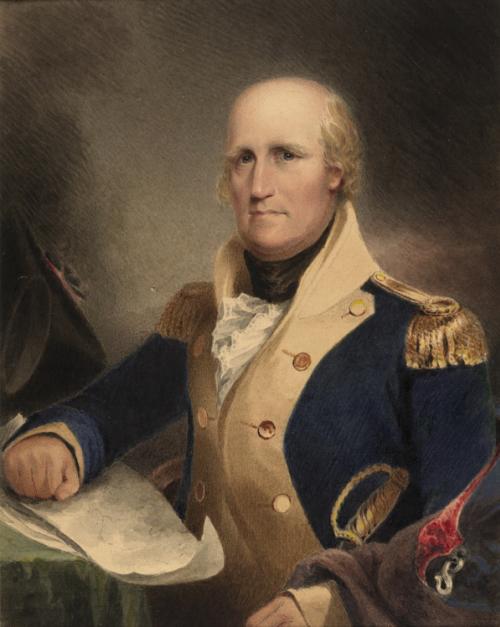
Painting by James B. Longacre
For starters, George Rogers Clark was a celebrated Revolutionary War General and an area founder. You’ll find his full name on the George Rogers Clark Memorial Bridge – the bright yellow toll-free bridge crossing from Clarksville and Jeffersonville to downtown Louisville, Kentucky. His younger brother, William Clark, is more widely known for leading the famed Lewis & Clark Expedition (also known as the Corps of Discovery Expedition) alongside fellow explorer Meriwether Lewis. The expedition, which helped facilitate westward expansion, literally launched from what is now Falls of the Ohio State Park in Clarksville, Indiana.
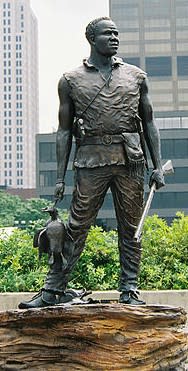
Attribution: Wikimedia Commons user Lucky For You
Lewis and Clark were joined by several others, including a frontiersman and hunter named York who was enslaved by William Clark. In assisting in the mission, York became the first African American to cross the continent and to make it to the Pacific Ocean.
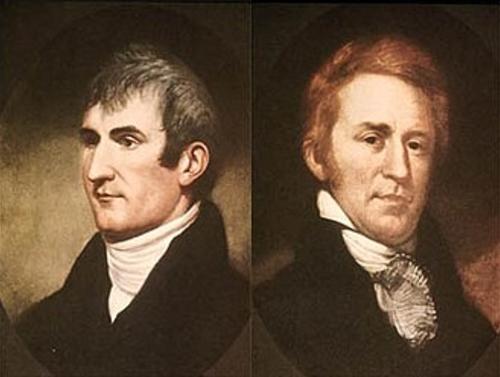
Lewis and Clark. Made from two public domain images Image:Meriwether Lewis.jpg and Image:William Clark.jpg.
When the party finally reached the ocean, William Clark estimated they had traveled roughly 4,162 miles in total. In all, the excursion and return journey lasted about two and a half years from 1804 to 1806.
George Rogers Clark Returns
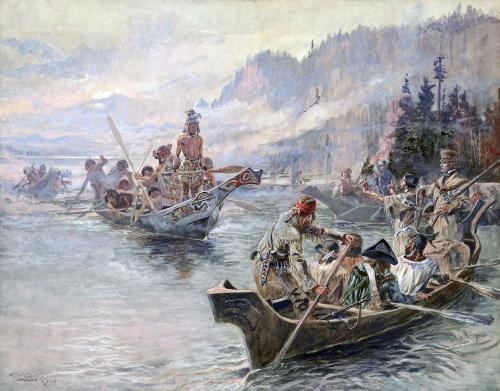
Painting Lewis and Clark on the Lower Columbia (height: 24 in (60.9 cm); width: 28 in (71.1 cm)) by Charles Marion Russell
Meanwhile, back to George Rogers Clark – his role in Southern Indiana and Louisville starts when he first arrived in Kentucky in the early 1770s, where his family would establish a farm. Much of the grounds of that farm are now a public park in Louisville called, you guessed it, George Rogers Clark Park.
Within that park is what is believed to be the oldest tree in the Louisville public parks system. A tree planted on the farm by the Clark family after they arrived here from Virginia. The legend is that the Bald Cypress tree sprang up when Clark himself thrust his walking stick into the soil. However, at the time, the Bald Cypress was not indigenous to this area. Let’s just say it’s far more likely that the family brought either Cypress seeds or saplings with them.
George Rogers Clark was once considered one of the great American military leaders of all time. During his service in the Revolutionary War, he would lead a number of campaigns and rise to the rank of Brigadier General, leading victories in and around Kentucky and Illinois. He had only reached age 30 by the war’s end. Following the war, he helped lead troops against raids by Native Americans, although with mixed success.
George Rogers Clark’s Later Life
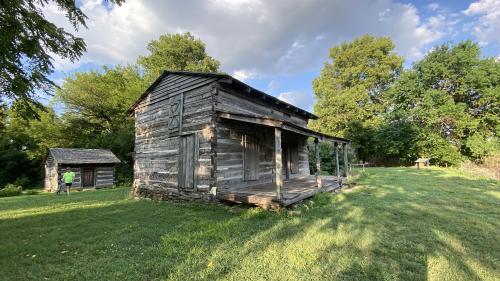
George Rogers Clark would ultimately relocate to the Southern Indiana area and build a cabin along the Ohio River in Clarksville. He was able to do so thanks to land he was awarded for his service by Virginia’s General Assembly, now known as Clark’s Grant. Clark County and Clarksville, along with other adjoining tracks, were part of the grant.
Gen. Clark would spend the rest of his life in Clarksville and the surrounding area, unfortunately facing seemingly never-ending financial difficulty. He died in 1818 at Locust Grove, a plantation in Louisville. Clark’s original cabin is long since gone, but historical markers tell the story of the home site.
Honoring History with Historic SoIN Passport
The spot where George Rogers Clark’s cabin was located is now part of the commemorative, 1,200-mile-long Lewis & Clark National Trail. It’s now also part of Historic SoIN: Red, White and Billie, a new digital passport from SoIN Tourism guiding people to historic sites of significance in Clark and Floyd counties.
Here are the three historic check-ins you can make with a stop at Falls of the Ohio State Park:
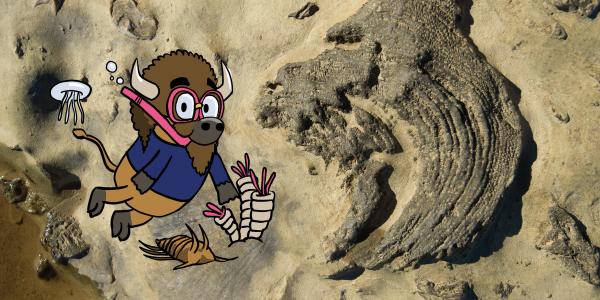
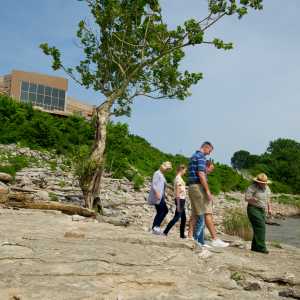
Fossil Beds: The history at the Falls predates the Clark family history … by a LOT. Per the Indiana Department of Natural Resources, the fossil beds found along the Ohio River at Falls of the Ohio State Park are some 390 million years old, making them among the largest such exposed Devonian-era fossil beds on the planet. Not bad for little ol’ Clarksville. When you visit, feel free to wander the grounds, gaze at the river and take a tour in the Interpretive Center to get the full feel of the place’s history.
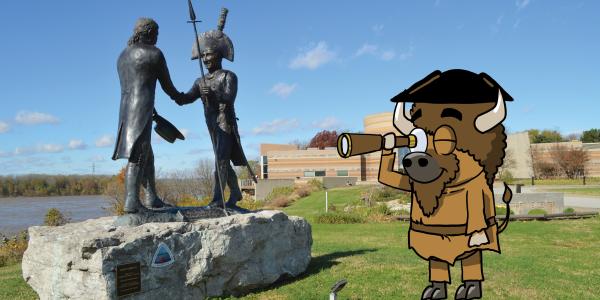
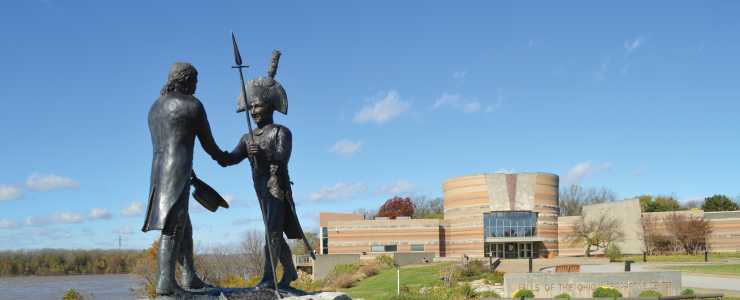
Lewis & Clark Handshake Statue: This historic statue, which depicts Lewis & Clark shaking hands in agreement of their shared quest, was dedicated in 2003 at the Falls. This is where the Corps of Discovery Expedition truly began, although generally the starting point usually observed by historians is farther west. Sculpted by artist Carol Grende, it is located just east of the Falls of the Ohio Interpretive Center and pays tribute to other aspects of history connected to the expedition. The statue was cleaned and restored in 2025.
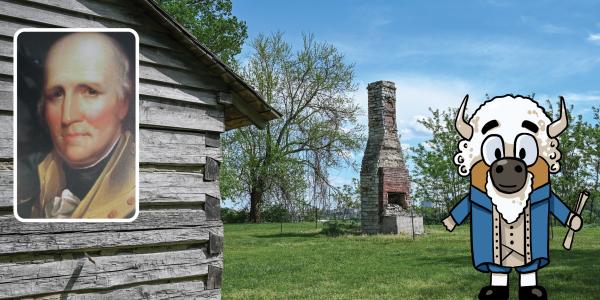
George Rogers Clark Home Site: When Clark’s military days were over and he was awarded the Clark Grant, his cabin along the Ohio near the Falls is where he envisioned living out his life. Unfortunately, health issues prevented that, and as noted earlier, he finished his life at the Locust Grove Plantation, which still stands in Louisville, Kentucky. The home site is roughly seven acres, and for many years included a replica cabin.
Unfortunately, it was the victim of arson in 2021 and has not been replaced. It was at this home that Lewis and Clark mapped out their journey and recruited men to join them. The home site is part of a public park and can be visited anytime. Still standing at the site is a replica of the McGee cabin. Venus and Ben McGee lived in nearby Guinea Bottoms, one of the first African American communities in the Northwest Territory. They were indentured servants of George Rogers Clark.
Celebrate America 250 in SoIN
As our nation celebrates 250 years of independence, SoIN Tourism welcomes all visitors to the area to take in the history found at the Falls of the Ohio – and all of Clark and Floyd counties.
To make the experience truly special, and for a chance to win some exclusive prizes, visitors and residents are invited to download the new Historic SoIN digital passport to make sure they catch all of SoIN’s historically significant sites.
Southern Indiana
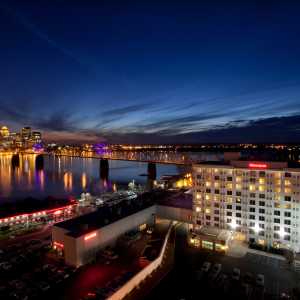
Head to SoIN, get a hotel along the riverside or within one of our towns and... Read more — Places to Stay
Sign-up to our monthly newsletter for insider blogs, special offers, and stay up... Read more — Email Sign-Up