




Strictly speaking, Rosie the Riveter, the well-known icon of World War II, was not just one person. She was many.
That’s simply to say that Rosie the Riveter was a movement, not a single figure. But what may escape those who venture to Southern Indiana – and maybe even some who live here – is that arguably the most iconic Rosie relocated to Clarksville following her time building bombers in Michigan.
Rose Leigh Monroe (also known as Rose Will Monroe) was iconic because she was the Rose who starred as Rosie the Riveter in promotional films designed to promote the purchase of War Bonds and inspire other potential Rosie-the-River-style workers.
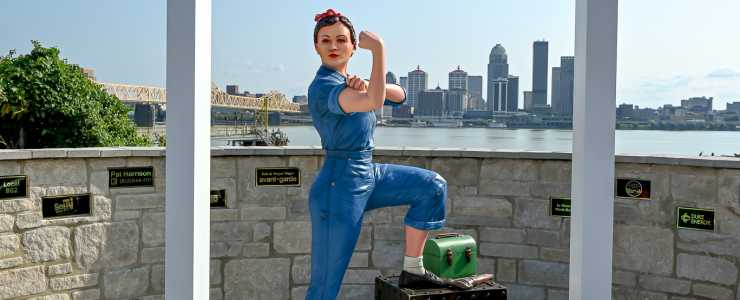
And Monroe’s service to her country while so many American men were off at war is honored with a Rosie the Riveter monument along the riverfront in Clarksville, dedicated in 2022.
What Was the ‘Rosie the Riveter’ Movement?
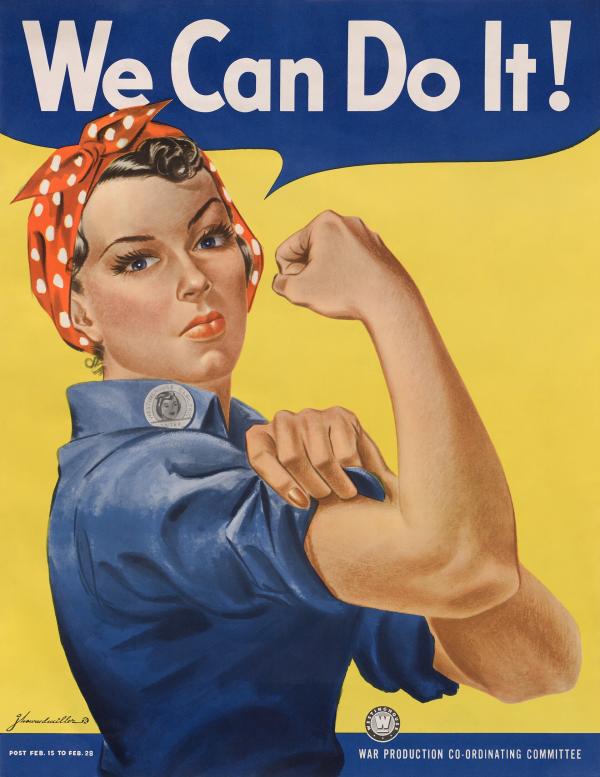
While there were many Rosies – women named Rose or a variation thereof who were working in factories to help the war effort and who identified with the icon – it was Monroe who actor Walter Pidgeon and his team of producers cast as Rosie for promotional films and posters.
Per Ford Motor Company, during the peak of the war, its Willow Run plant in Michigan employed women for up to a third of its workforce. For her part, Monroe was busy helping to build B-29 and B24 military planes. The movement led not only to the promotional films but also to the memorable “We can do it!” slogan that appeared on posters.
Interestingly, before Monroe ever moved to Michigan, “Rosie the Riveter” had already become a symbol of women leaving their homes to aid in the war effort. A popular song during that initial recruitment effort by Kay Keyser, simply titled “Rosie the Riveter,” hit the airwaves, and was a possible inspiration for Monroe. The song, however, was inspired by a woman from Long Island named Rosalind P. Walter, according to MotorCities.org.
“Everyone stops to admire the scene / Rosie at work on the B-Nineteen / She’s never twittery, nervous or jittery / Rosie the Riveter…”
Historically, these Rosie the Riveters certainly were instrumental in winning WWII. But their legacy did more. Much more.
According to Ford Motor Company, “Women of today have the Rosies to thank for ground gained in women’s empowerment. The Rosies are often credited with being the first substantial force of working women, and for creating the modern model for child daycare. The Rosie phenomenon broke race barriers, as women of all races worked side by side in the factories. The war presented the opportunity for roughly six million women to prove they could do a man’s job, performing plant operations that were high risk and physically taxing even for men.”
Who Was Rose Leigh Monroe?
Often referred to as “Michigan’s own,” but actually born in rural Kentucky, Monroe lost her husband to an automobile accident at the onset of WWII, leaving her the difficult task of raising her two children alone. When the U.S. entered the war, she decided to find opportunity up north, and she relocated to Ypsilanti, home to the Willow Run plant.
Interestingly, she did not go to Michigan to rivet war planes – she went to fly them. Not only was the plant building planes, but they were also training women to be aviators. Unfortunately, the fact she was a single mother disqualified her. So, she went to work as a riveter, caught Pidgeon’s eye in doing so and the legend was born.
Once her tour of duty, so to speak, was finished and the war was won, Monroe relocated to Clarksville. But she didn’t retire or try to capitalize on her fleeting national celebrity – rather, she simply went back to life. Following the war, according to LaterBloomer.com, she drove a cab, operated a beauty shop and launched a construction company.
Monroe also would remarry and have a third child. And in 1950, she finally fulfilled her original destiny: Rosie learned to fly an airplane.
“She was quite a good pilot,” her daughter Vickie said. “She taught me how to fly.”
Monroe lived the rest of her life in Clarksville, dying at age 77 in 1997 due to kidney failure. She is buried in New Albany’s Abundant Life Memorial Gardens.
About the Monument
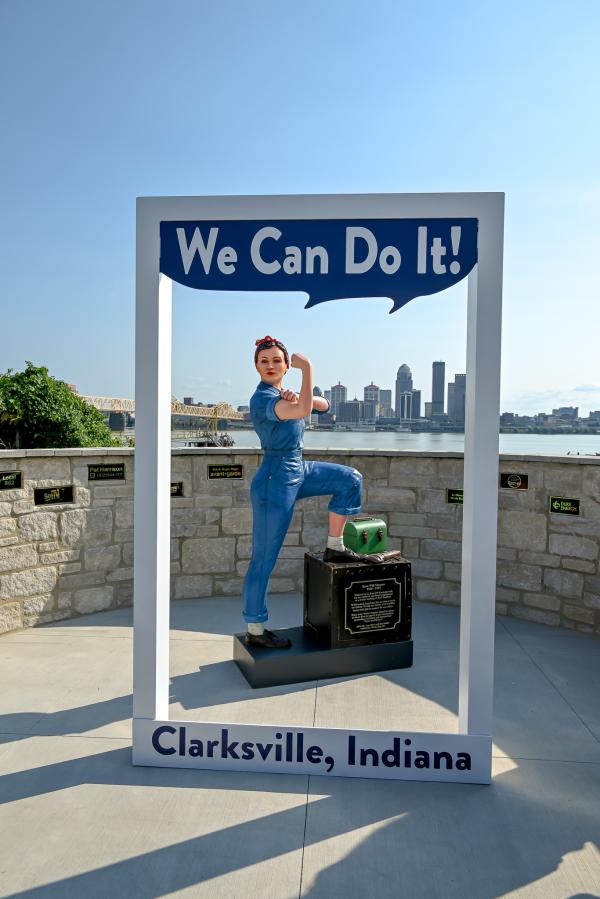
The Rosie the Riveter monument was unveiled Sept. 16, 2022, and features the famous “We can do it!” slogan, along with an image of Rosie. The statue was funded largely through a crowdfunding effort launched by the Clarksville Historic Preservation Commission. Designed to facilitate visitor photo ops, it pays tribute to Monroe’s service and her connection to this unique piece of WWII history. It also serves as a sort of community rallying cry.
Perhaps more importantly, the monument pays tribute to the person behind the most famous Rosie the Riveter.
“We always knew that she was Rosie, but it was just part of who she was,” Cathy Avischious, Monroe’s granddaughter, told WDRB news at the monument's dedication. “She was a very non-traditional grandma in that, I don’t think she ever baked, she drove a convertible, and she taught my brother how to do donuts in the parking lot. She was just a wonderful, fun-loving, enjoyable person to be around. She was a spitfire.”
Historic SoIN & America 250

Clarksville’s Rosie the Riveter monument is now part of Historic SoIN: Red, White and Billie, a new digital passport from SoIN Tourism guiding people to historic sites of significance in Clark and Floyd counties. Sign up for free today to explore and win exclusive prizes!
Check out our America 250 page for more details on the passport and related events happening in SoIN.